
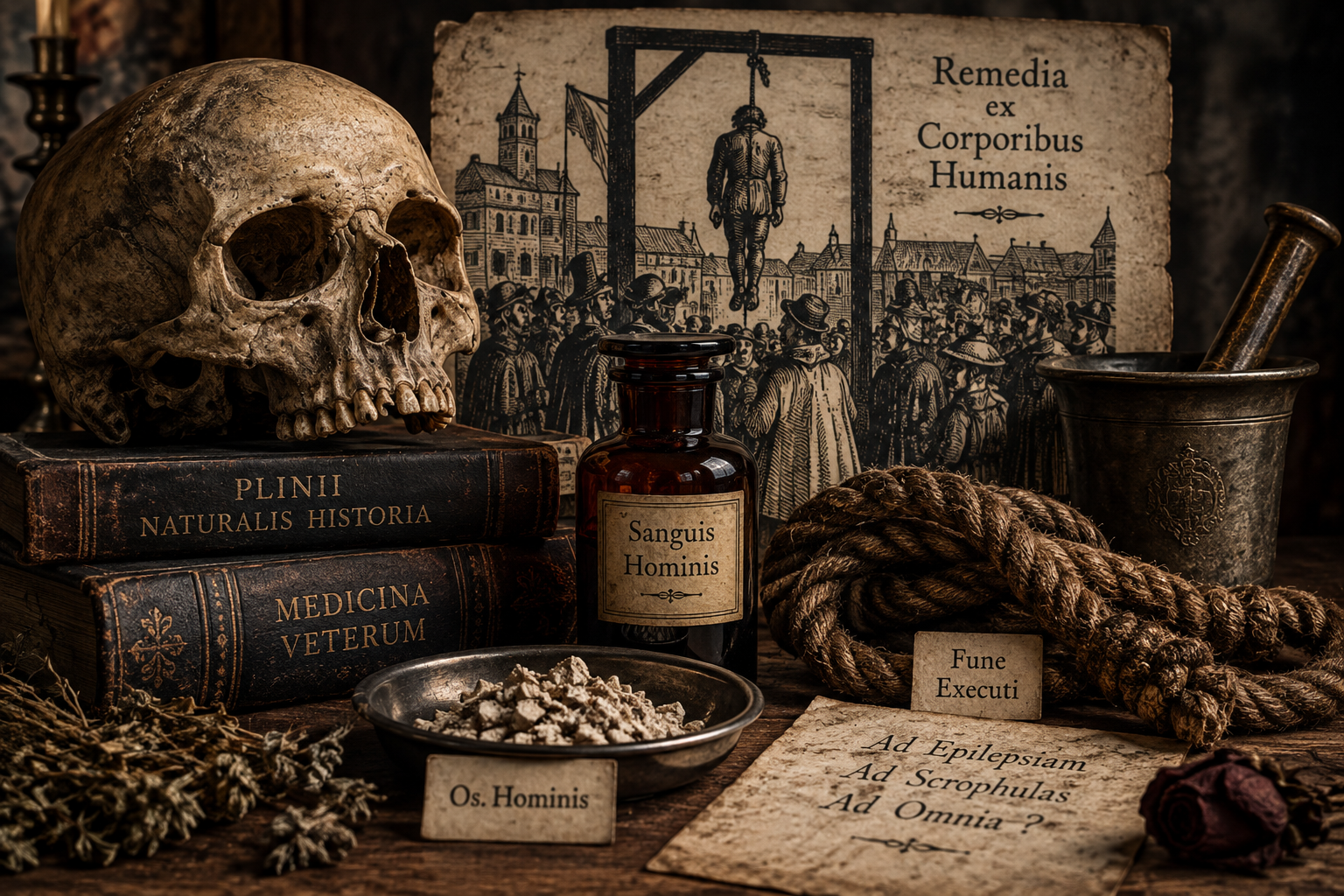
Corpse Medicine: When the Dead Were Considered a Pharmacy
There are moments in medical history when the reasonable response is:
Surely someone made this up.
Corpse medicine is one of those moments.
For centuries, human remains could be treated as medicine.
Blood.
Bones.
Skulls.
Fat.
Hands.
Even the rope used to hang someone.
And in some traditions, the remains of an executed criminal were considered especially powerful.
This was not one isolated superstition tucked away in a single village.
Versions of the belief appeared across Europe and beyond, sometimes surviving well into the nineteenth century.
One of the strangest records comes from folklorist Mabel Peacock, whose 1896 article Executed Criminals and Folk-Medicine collected examples from Britain, France, Scandinavia, and elsewhere.
Her paper begins with a cure involving a dead man’s hand.
It gets considerably worse from there.
The Healing Hand of a Dead Man
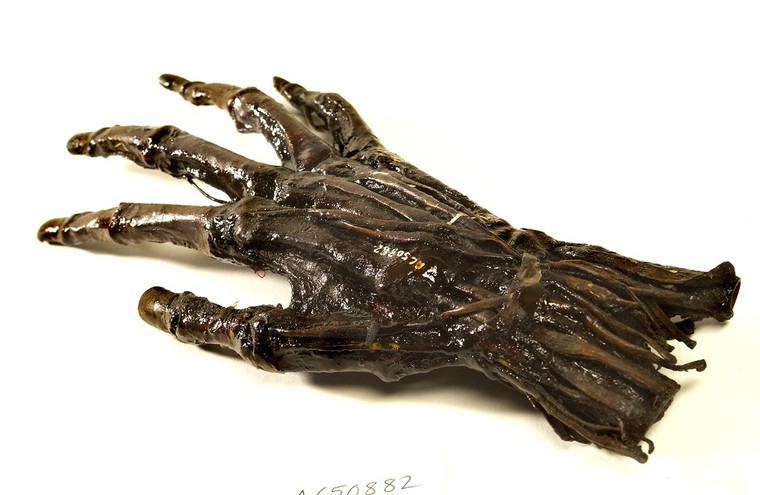
In English folk medicine, certain swellings known as wens were believed to respond to contact with the dead.
Peacock cites an earlier account from Suffolk describing a treatment in which the hand of a corpse was passed over the affected area on three successive days.
In Lincolnshire, the ritual could become more specific.
A dead man’s hand was to be passed seven or nine times over wens or goitrous swellings.
And not just any corpse would do.
The preferred dead person was someone who had:
been executed for a crime
or
died by drowning.
Apparently ordinary death lacked sufficient therapeutic enthusiasm.
Why were violent deaths considered special?
One explanation was that a person killed suddenly had died while still full of vitality.
Their life had been cut off abruptly rather than gradually consumed by disease or old age.
That remaining vitality, people believed, might somehow be transferred to the sick.
An Execution Becomes a Clinic
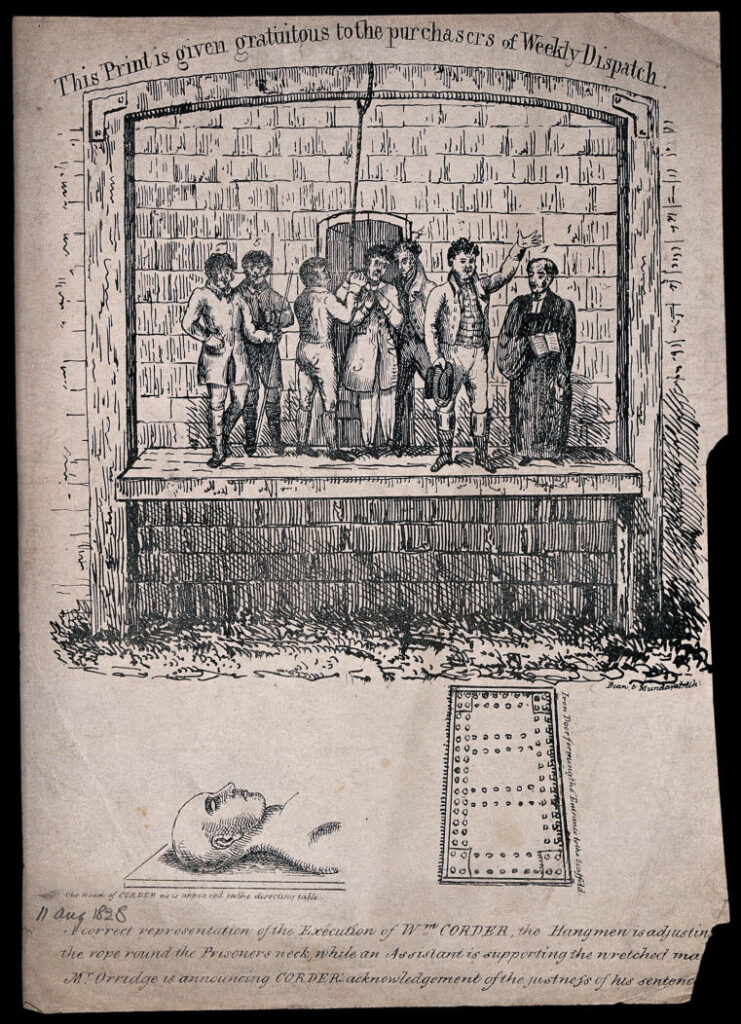
This belief was not merely theoretical.
Peacock cites a report from the Stamford Mercury, dated March 26, 1830.
Following the execution of three men at Lincoln, two women reportedly approached the bodies so that the dead men’s hands could be rubbed over diseased areas.
One woman brought a child for the same purpose.
Think about that scene for a moment.
A public execution has just ended.
The crowd remains.
And someone steps forward carrying a sick child because the body hanging there is now considered a medical opportunity.
Medicine, folklore, religion, punishment, and spectacle all occupied the same space.
And apparently nobody thought the schedule was full enough already.
The Rope Was Medicine Too
The corpse itself was not the only thing believed to retain power.
The hanging rope could become a remedy.
In Lincolnshire, a piece of rope used to hang a criminal was reportedly considered useful against epilepsy.
Peacock also recorded traditions in which hanging rope was used against fever, colic, sciatica, toothache, and severe headache.
And this is where our old friend Pliny the Elder enters the room.
In Natural History, Book XXVIII, Pliny records a remedy for headache involving a halter that had been used to hang a man.
The surviving text really does say it.
From the Old Books
Pliny the Elder, Natural History, Book XXVIII
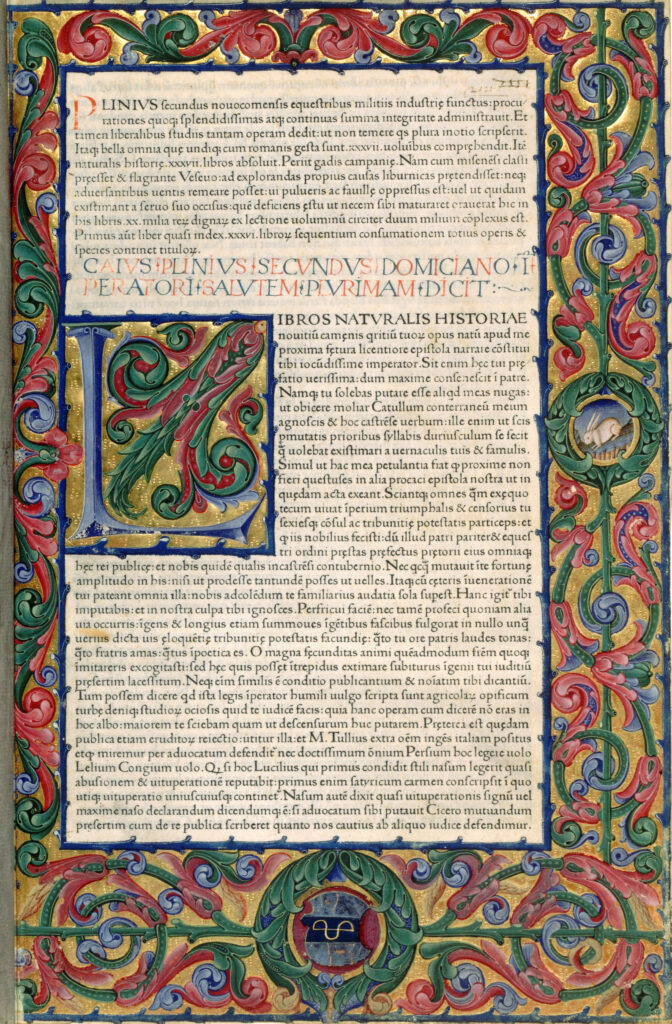
Credit: Pliny the Elder, Historia Naturalis, 1469. Bibliothèque nationale de France. Public Domain.
Among the remedies collected there is the claim that headache could be relieved by binding the temples with a halter used in a hanging.
No, Leech House did not invent this one.
Pliny got there first.
Drinking the Blood of Executed Criminals
If touching a corpse sounds unsettling, Scandinavian folk medicine managed to raise the stakes.
Peacock records reports from Sweden and Denmark in which the blood of a recently beheaded criminal was believed to treat various illnesses.
People suffering from epilepsy were said to gather near executions with cups, hoping to drink the blood while it was still warm.
The freshness mattered.
The criminal had died violently and suddenly.
His blood was therefore imagined as retaining a kind of living strength that might pass into the person who consumed it.
Epilepsy appears repeatedly in these traditions.
Historically, epilepsy was often interpreted through supernatural or spiritual frameworks because of its dramatic seizures and altered states of consciousness.
That may help explain why remedies involving violent death, execution, sacred power, or sympathetic magic became attached to it.
The cure was gruesome.
But within the belief system, it had an internal logic.
Skull Medicine
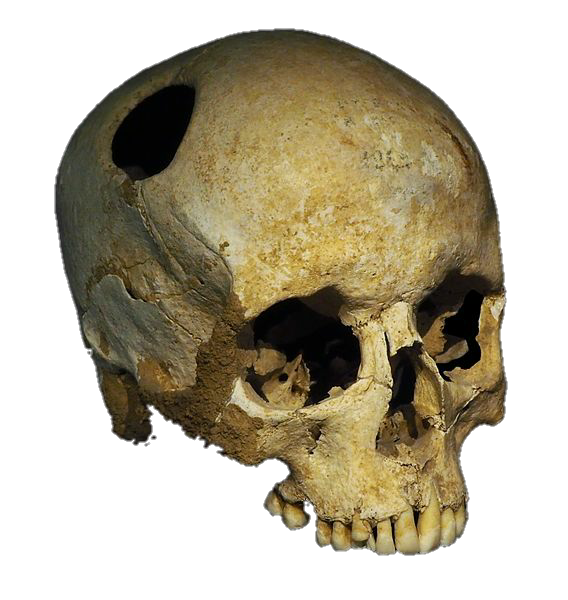
Human skulls also entered the pharmacy.
Peacock reports that Christian IV of Denmark was said to have taken powders partly made from the skulls of criminals as a treatment for epilepsy.
Elsewhere, powdered human skull became part of European medicinal preparations.
The underlying idea varied.
Sometimes the skull was associated with the head and therefore used against neurological problems.
Sometimes the power was thought to come from the manner of death.
Sometimes consuming part of the dead was imagined as transferring vitality or medicinal force.
This broader European practice is often described today as corpse medicine or, more provocatively, medical cannibalism.
The term sounds sensational.
Unfortunately, the history does not particularly need help being sensational.
Why Executed Criminals?
This is one of the most interesting parts.
Why should a criminal’s body be more medicinal than anyone else’s?
Peacock explores the idea that violent death preserved a kind of concentrated vitality.
Someone who died from illness had already been weakened.
Someone executed while otherwise physically healthy had not.
Their body was imagined as still containing the force of life at the moment it was abruptly stopped.
A similar logic could apply to people who drowned.
They too had died suddenly rather than through prolonged sickness.
Another factor was the unusual social and symbolic status of the executed body.
Execution occurred publicly.
The body belonged simultaneously to the criminal, the state, the crowd, religious imagination, and folklore.
It was an object charged with meaning.
And humans have always been remarkably good at deciding that objects with unusual histories must also have unusual powers.
Healing by Touch Was Already Ancient
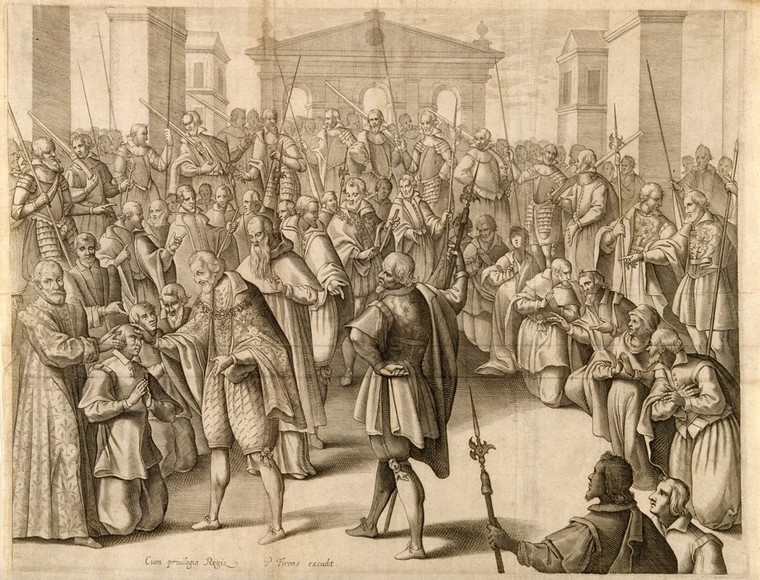
The belief that certain bodies could heal by touch was much older than nineteenth-century folk medicine.
Peacock connected these traditions with broader beliefs in healing touch, including the famous royal practice of touching sufferers of scrofula, historically called the king’s evil.
Kings of England and France were believed capable of curing the disease through touch.
The logic was different—royal sacred power rather than criminal vitality—but the structure is strikingly similar:
Some people were thought to contain healing power simply because of who they were.
Peacock also discusses older claims that dead bodies could heal through touch.
And again:
Pliny shows up.
In Natural History, he records traditions involving the touch of those who had died prematurely for conditions such as scrofulous swellings and diseases of the throat.
Apparently Book XXVIII is where dignity went to die.
Corpse Medicine Was Not Just “Stupid People Being Stupid”
This is where the subject becomes more interesting than a collection of grotesque trivia.
People did not have microbiology.
They did not understand epilepsy neurologically.
They did not understand tumors, endocrine disorders, infection, or immune disease in modern terms.
But they did understand symbolism.
They understood sudden death.
They understood strength.
They understood contamination and transfer—although not necessarily in ways modern medicine would recognize.
If disease could move into you, perhaps health could move into you too.
If a powerful person could bless you through touch, perhaps a violently dead person could transfer something through touch.
If vitality existed in blood, then freshly spilled blood might contain the most vitality of all.
The reasoning was wrong.
But it was not random.
It came from a worldview in which bodies, objects, death, morality, religion, and medicine overlapped.
The Curious Case of the Criminal Corpse
Executed criminals occupied a strange position.
They were condemned.
Feared.
Publicly displayed.
Sometimes dishonored after death.
And yet parts of their bodies could become highly sought-after.
Their ropes brought luck.
Their hands healed swellings.
Their blood treated epilepsy.
Their skulls became medicine.
Death transformed the criminal from a person rejected by society into an object people wanted to touch, drink, carry, grind, or preserve.
There is something deeply human about that contradiction.
Apparently even in death, a criminal could still find himself assigned community service.
From Folklore to Historical Record
One reason this story is so valuable for Leech House is that we do not have to rely entirely on modern retellings.
Mabel Peacock published Executed Criminals and Folk-Medicine in 1896 in the journal Folklore, volume 7, issue 3, pages 268–283. The article remains accessible today.
Even better, she cites earlier sources:
local folklore collections,
newspaper reports,
French ethnographic writings,
Scandinavian traditions,
and ancient authors.
That means we can follow the rabbit hole backward.
A modern blog mentions corpse medicine.
We find Peacock.
Peacock mentions an 1830 newspaper.
Peacock mentions Pliny.
Then we open Pliny.
And suddenly a bizarre internet fact becomes a chain of historical evidence.
That is exactly the kind of rabbit hole Leech House exists for.
Did Corpse Medicine Actually Work?
Not in the way practitioners believed.
There is no medical basis for rubbing a dead criminal’s hand over a goiter or drinking execution blood to cure epilepsy.
Some practices also carried obvious risks of infection and poisoning.
But asking only whether the remedies worked misses part of the history.
Corpse medicine tells us something about how people understood the body before modern medicine separated physiology from magic, religion, and symbolism.
Bodies could contain power.
Death could preserve it.
Violence could intensify it.
And medicine could involve not only what something physically did—
but what people believed it meant.
Which is why, centuries later, we are still reading about people standing beneath scaffolds with cups.
Sources & Further Reading
Primary and historical sources
Mabel Peacock. “Executed Criminals and Folk-Medicine.” Folklore, vol. 7, no. 3, 1896, pp. 268–283.
Pliny the Elder. Natural History, Book XXVIII.
Peacock’s article also cites earlier regional folklore collections and an 1830 Stamford Mercury report concerning the use of executed men’s hands in folk healing.
Leech House examines historical medical and folk beliefs for educational purposes. Historical remedies described here are not medical advice and should not be attempted.