
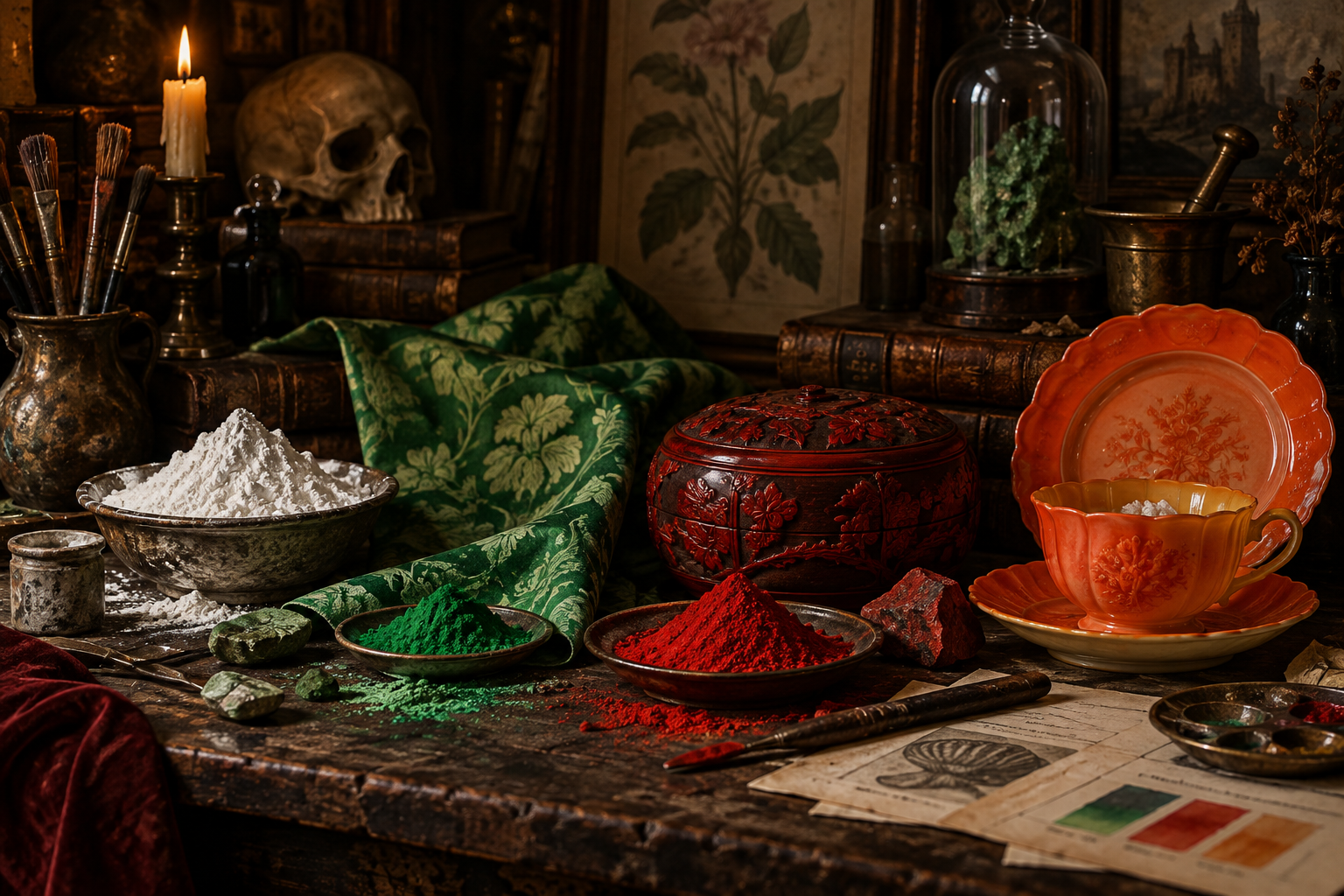
The Deadliest Colours in History: When Beautiful Pigments Could Poison You
History has produced some truly magnificent colors.
Brilliant whites.
Impossible greens.
Fiery reds.
Glowing oranges.
There was just one small problem.
Some of them were made with lead, arsenic, mercury, and uranium.
Which makes the history of color considerably more exciting than standing in the paint aisle at Home Depot.
For centuries, artists, manufacturers, decorators, and consumers used pigments long before modern toxicology could fully explain what repeated exposure might do to the human body.
And sometimes people already knew a substance was dangerous—
but the color was just too damn good.
White Lead: Beautiful, Useful, and Full of Lead
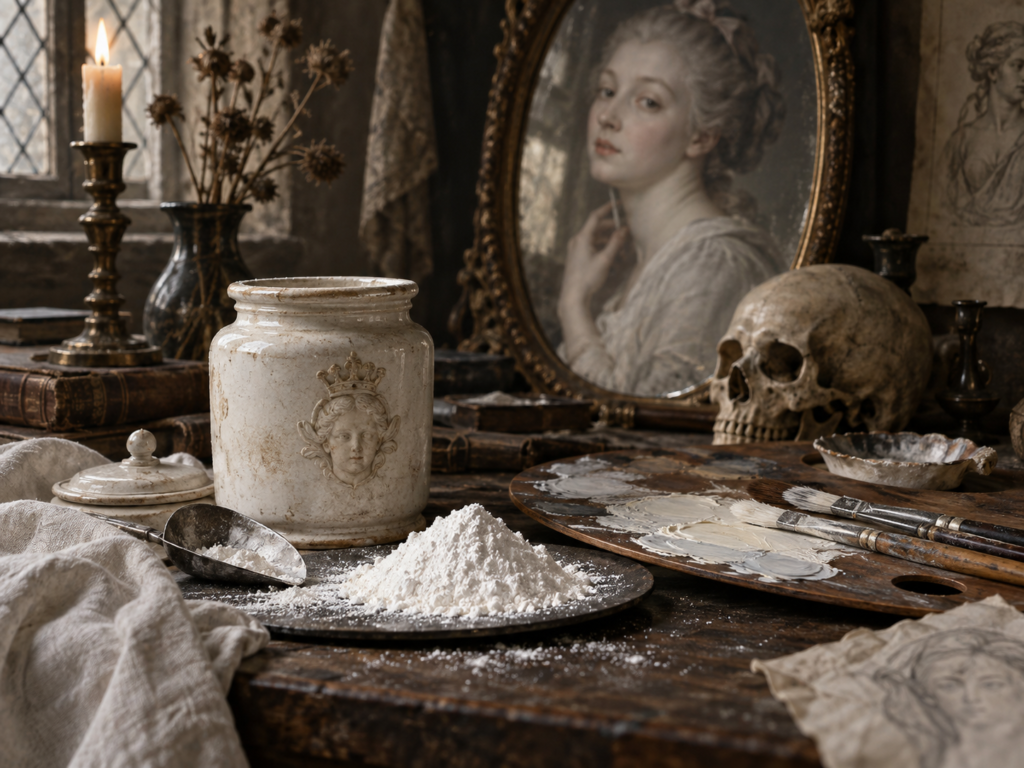
White seems innocent enough.
Historically, it really wasn’t.
Lead white is one of the oldest manufactured pigments known, with methods for making it recorded in the ancient Mediterranean world. The process involved exposing lead to vinegar vapors until a white lead compound formed, which could then be scraped, washed, dried, and ground into pigment.
The result was exceptionally useful.
Lead white was opaque.
It covered beautifully.
It mixed well with other colors.
And for centuries it became one of the dominant whites in European painting. The Metropolitan Museum notes that it was particularly important in medieval manuscripts and flesh tones.
Unfortunately, the phrase lead white contains a fairly substantial clue about the problem.
Lead exposure can damage multiple organ systems, especially the nervous system. Grinding and manufacturing the pigment created particularly dangerous opportunities to inhale or ingest lead-containing dust.
Occupational lead poisoning among painters even became associated with the term painter’s colic.
Apparently “the paint is attacking my nervous system” was simply part of the artistic process.
Why Didn’t They Just Stop Using It?
Because lead white was extremely good at being white.
It had warmth and opacity that later alternatives did not reproduce in exactly the same way. Getty notes that the pigment remained a default white in European painting for centuries despite growing awareness of its hazards.
A recurring theme in this article will be:
Yes, it was poisonous.
But have you seen the color?
Arsenic Green: Fashion’s Favorite Little Poison Cloud
Then came green.
And green had ambition.
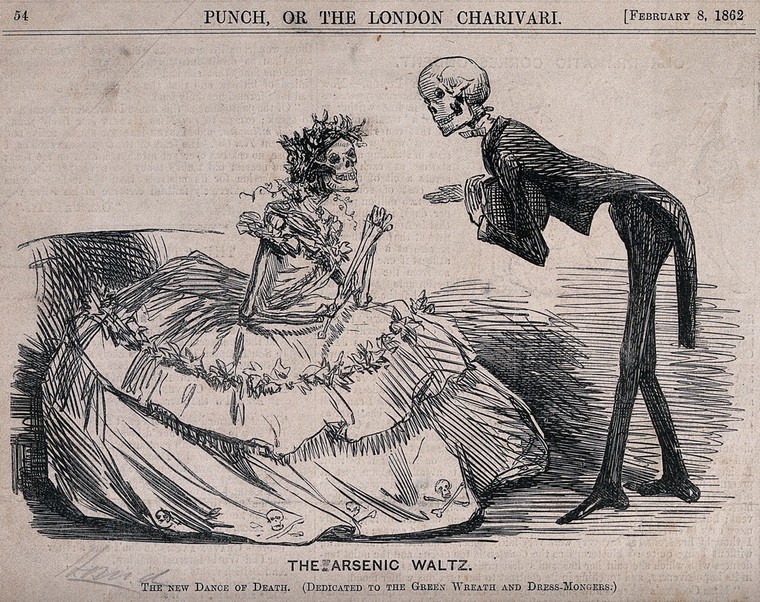
In the eighteenth century, chemist Carl Wilhelm Scheele developed a brilliant copper-and-arsenic green pigment now known as Scheele’s Green. It was vivid, relatively inexpensive, and more visually striking than many earlier greens.
A related arsenical pigment, commonly called Emerald Green or Paris Green, followed in the nineteenth century.
Suddenly bright green appeared everywhere:
wallpaper,
fabric,
artificial flowers,
paint,
toys,
and other decorative goods.
Wellcome Collection describes arsenical green as one of the fashionable colors of the nineteenth century precisely because it was vivid, stable, cheap to manufacture—
and unfortunately toxic.
The Green Dress Problem
Workers who manufactured arsenic-colored goods faced particularly heavy exposure.
One of the most famous cases was Matilda Scheurer, a young artificial-flower worker in London whose death became associated with the dangers of arsenic green. Artificial leaves were dusted with green arsenical pigment, meaning workers could breathe the powder while making fashionable decorations.
Beautiful flowers.
No watering required.
Occasional arsenic poisoning.
Victorian efficiency.
Did Arsenic Wallpaper Kill Napoleon?
This story gets repeated constantly.
Napoleon spent his final years on Saint Helena in rooms decorated with green wallpaper, and arsenic has been detected in samples associated with the residence.
So naturally the internet eventually decided:
THE WALLPAPER KILLED NAPOLEON.
The reality is less tidy.
Arsenic exposure from wallpaper is historically plausible, and arsenical pigments really were used in wallpapers. But Napoleon’s death cannot simply be blamed on his green room, and the old claim remains disputed. Your source notes this distinction too: levels found in wallpaper may have been capable of contributing to illness without proving they caused his death.
Which is honestly more interesting.
We don’t need the myth.
The wallpaper itself was already made with arsenic.
Vermilion: The Red Made From Mercury
Red has rarely been subtle.
Cinnabar is a naturally occurring mercury sulfide mineral.
When processed into pigment, it produces the intensely red color historically known as vermilion.
It was spectacular.
So naturally humans used it everywhere.
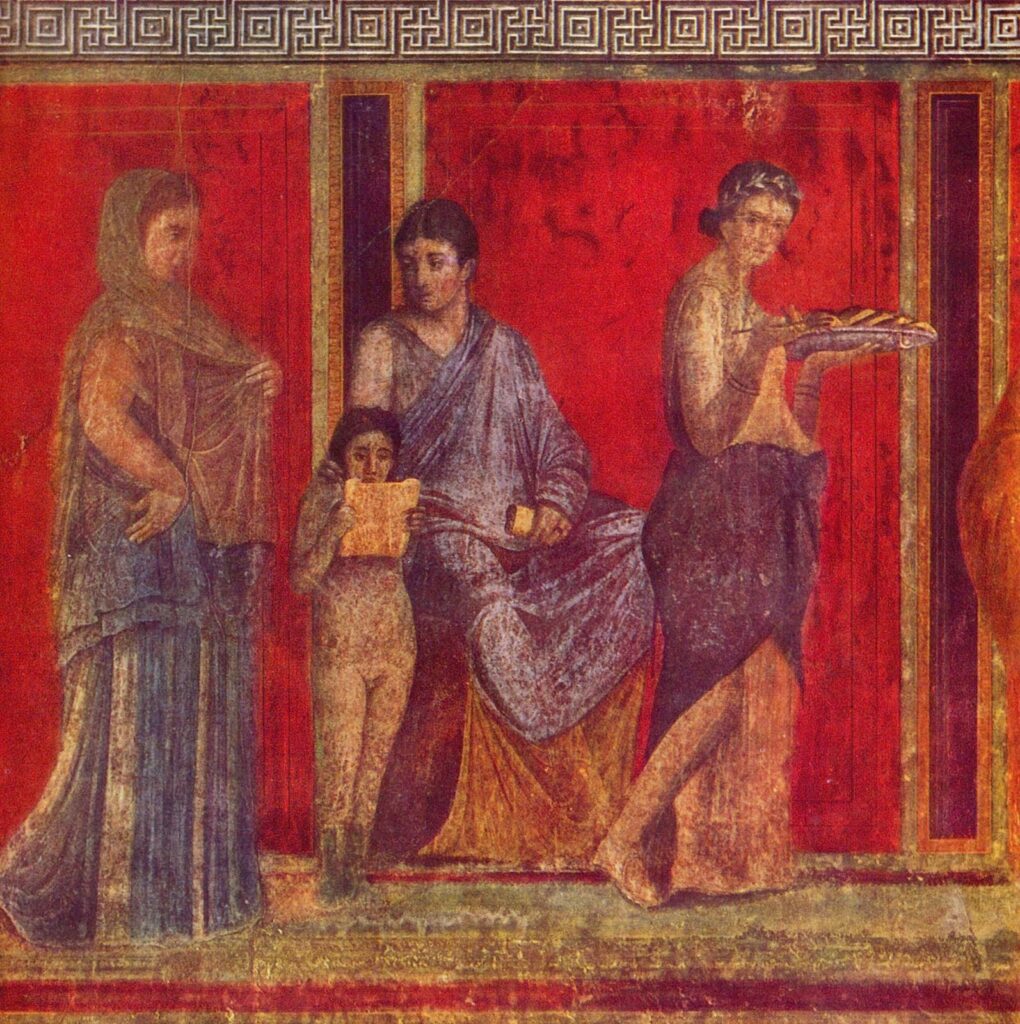
Ancient Romans used cinnabar and vermilion in wall paintings. Chinese artists and craftspeople incorporated it into lacquerware. It appeared in manuscripts, paintings, ritual objects, burials, and decorative arts across cultures.
The Metropolitan Museum notes that cinnabar has been used across the world for thousands of years and that natural cinnabar and the pigment vermilion are chemically mercury sulfide, HgS.
The mineral’s red color was so visually powerful that it became associated in different cultures with things like blood, vitality, victory, death, and immortality.
Which is quite a résumé for a rock containing mercury.
Was Vermilion as Dangerous as Liquid Mercury?
Not exactly.
This is an important distinction.
“Cinnabar contains mercury” does not mean touching an old vermilion painting was equivalent to handling elemental mercury or highly toxic organic mercury compounds.
Cinnabar is mercury sulfide, a comparatively insoluble form.
But mining it, processing it, heating it, grinding it, or otherwise creating exposure could still present serious hazards.
So we’re not going to tell readers:
Red painting = instant mercury poisoning.
That’s not accurate.
The danger depended heavily on the form of mercury and the way people encountered it.
The history is strange enough without helping it along.
Radioactive Dinnerware: Because Apparently Plates Needed Uranium
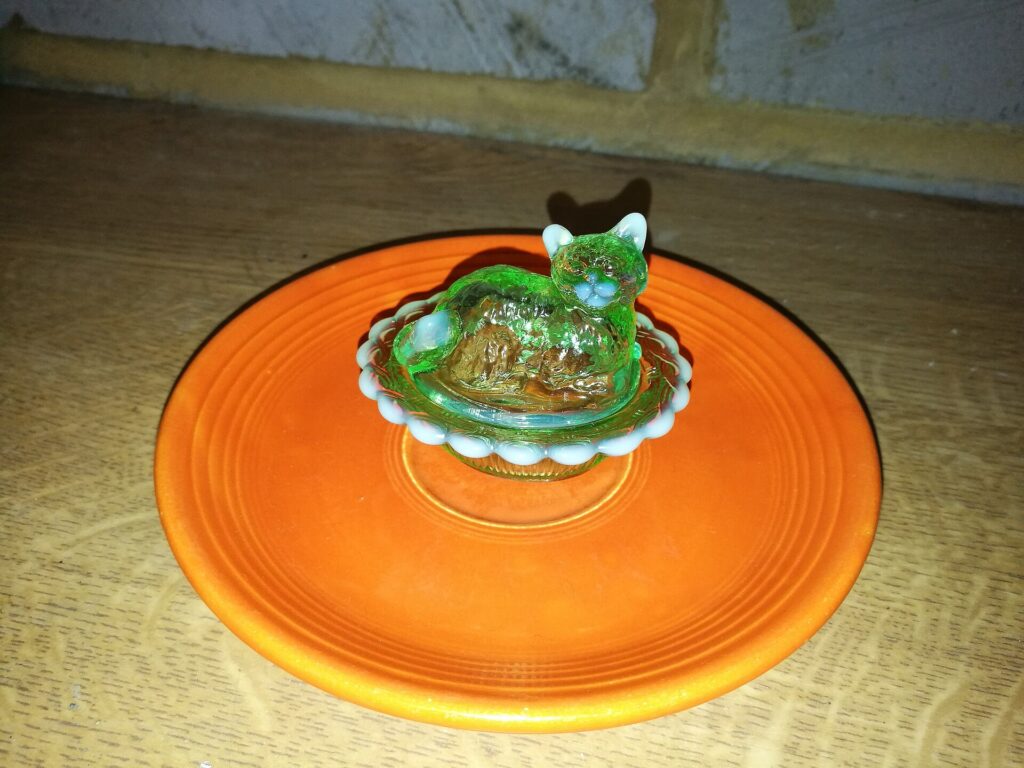
By the twentieth century, humanity had made enormous scientific progress.
Naturally, we responded by putting uranium into dinnerware.
Uranium compounds were used in ceramic glazes to create vivid reds, oranges, yellows, and other colors. Your old notes focused especially on American Fiesta ware, introduced in the 1930s.
The United States Environmental Protection Agency confirms that some older ceramics used uranium-containing glazes and that certain pre-1972 Fiesta pieces can register radioactivity above ordinary background levels.
Yes.
Your plate can make a Geiger counter notice it.
Does That Mean Vintage Fiesta Ware Will Kill You?
Again, we’re not going to turn a real phenomenon into a horror movie.
Radioactive glaze does not mean someone who once ate a sandwich from an old Fiesta plate immediately developed cancer.
Risk depends on dose, duration, the particular object, and whether radioactive material can migrate from the glaze.
But the EPA advises that some older radioactive ceramics are better kept as collectibles rather than used for eating or drinking.
Which seems fair.
There are many ways to serve dinner.
Radioactive plate does not need to be one of them.
Why Were Toxic Pigments Used for So Long?
It is tempting to look backward and ask:
Did nobody notice that these things were poisonous?
Sometimes they did.
The bigger problem is that recognizing a hazard and eliminating it are very different things.
A pigment could be:
beautiful,
cheap,
durable,
easy to manufacture,
fashionable,
and commercially valuable.
The people exposed most heavily were often not wealthy art collectors admiring finished paintings.
They were miners.
Pigment grinders.
Factory workers.
Flower makers.
Painters.
Ceramic workers.
People handling powdered compounds day after day.
The finished color might sit peacefully on a wall.
The process required to put it there could be much less peaceful.
The Poison Was Part of the Palette
What makes these colors fascinating isn’t simply that people once used toxic chemicals.
We still use hazardous substances today.
What makes them fascinating is how completely beauty can hide danger.
A brilliant white became associated with refinement.
A vivid green became fashionable enough to cover entire rooms.
Mercury produced one of humanity’s most treasured reds.
Uranium helped create dinnerware so cheerful that people still collect it.
The chemistry was invisible.
The color wasn’t.
And sometimes that’s all it took.
History did not simply paint with dangerous substances.
For a very long time—
danger was part of the palette.
Sources & Further Reading
Your original research notes documented lead white, arsenic greens, cinnabar/vermilion, and uranium-based ceramic glazes and gave us the backbone of this article.
For additional verification and deeper reading:
The Metropolitan Museum of Art — history and conservation of lead white and cinnabar/vermilion.
Getty — historical manufacture and use of lead white.
Wellcome Collection — arsenical green pigments and nineteenth-century fashion.
U.S. Environmental Protection Agency — uranium-containing ceramics and antique Fiesta ware.